Utah Republican Defies Trump's AI Deregulation Push in High-Stakes Political Showdown
Utah Republican Doug Fiefia, a former Google employee running for state senate, is directly challenging Trump's push to prevent states from regulating AI. His expertise-driven campaign highlights growing tensions within the GOP over technology oversight.
Utah Republican Defies Trump's AI Deregulation Push in High-Stakes Political Showdown
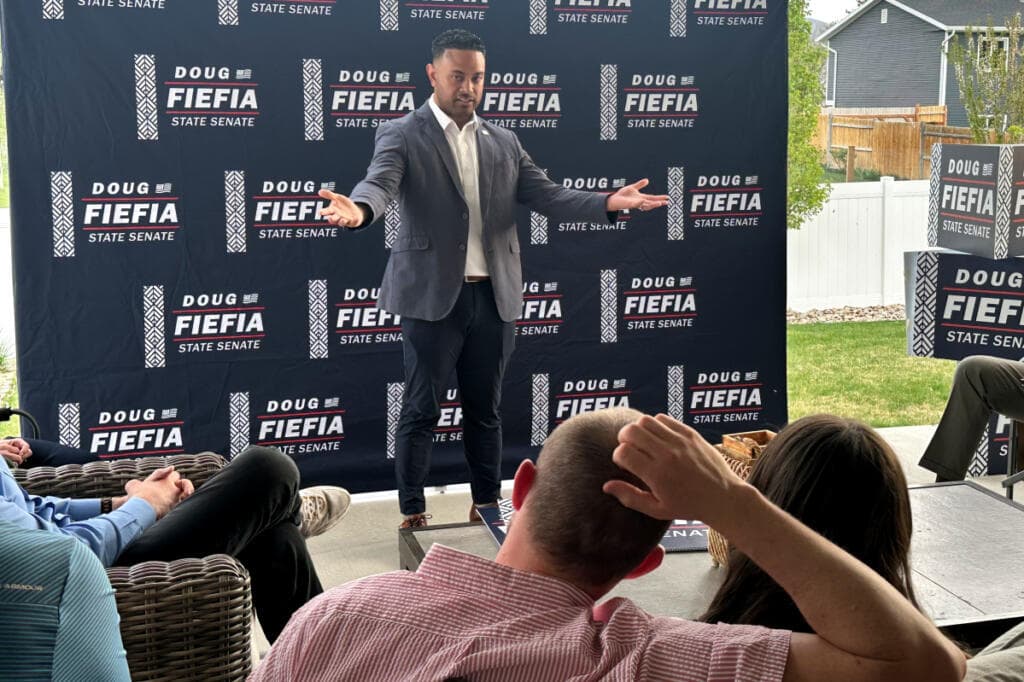
A fascinating political drama is unfolding in Utah, where a Republican state representative is charting a course that directly contradicts President Trump's artificial intelligence agenda. Doug Fiefia, a former Google employee now running for state senate, has made AI regulation the cornerstone of his campaign – putting him squarely at odds with the Trump administration's deregulation stance.
The Tech Insider Turned Politician
Fiefia's background gives him unique credibility in the AI debate. Having worked inside one of the world's most powerful tech companies, he brings firsthand knowledge of how artificial intelligence systems operate and the potential risks they pose. This insider perspective has shaped his belief that states must take an active role in regulating AI, regardless of federal preferences.
"My experience at Google opened my eyes to the incredible power of these technologies," Fiefia has stated in campaign materials. "We can't simply trust that the market will self-regulate when the stakes are this high for American families."
Trump's Federal Preemption Strategy
The Trump administration has been clear about its desire to prevent a patchwork of state AI regulations from emerging across the country. White House officials argue that federal oversight should take precedence, allowing for more streamlined innovation and preventing regulatory fragmentation that could handicap American tech companies in global competition.
This approach aligns with Trump's broader philosophy of reducing regulatory burdens on businesses, particularly in emerging technology sectors where the United States seeks to maintain its competitive edge against China and other rivals.
The Republican Rebellion
Fiefia isn't alone in his stance. Several other Republican politicians with tech backgrounds have emerged as advocates for state-level AI oversight, creating an interesting schism within the party. These lawmakers argue that states have always played a crucial role in protecting consumers and that AI is no exception.
"This isn't about being anti-business or anti-innovation," one Republican source close to Fiefia's campaign explained. "This is about ensuring that as these powerful technologies reshape our society, we have appropriate guardrails in place."
Utah's Tech-Forward Approach
Utah has positioned itself as a technology-friendly state, attracting major tech companies and startups with favorable business conditions and a skilled workforce. The state's "Silicon Slopes" region has become a significant tech hub, making AI regulation a particularly relevant issue for Utah voters.
Fiefia's campaign has emphasized that smart regulation can actually enhance Utah's appeal to responsible tech companies while protecting residents from potential AI-related harms such as privacy violations, algorithmic bias, and job displacement.
Political Implications
This intraparty conflict highlights the complex challenges facing Republicans as they navigate the rapidly evolving technology landscape. While the party traditionally favors limited government intervention, the unprecedented capabilities of AI systems have prompted some conservative lawmakers to reconsider their regulatory approach.
The outcome of Fiefia's senate race could signal whether Republican voters are willing to support candidates who break with Trump on key technology issues. A victory would demonstrate that local expertise and constituent concerns can override party loyalty on complex technical matters.
Looking Ahead
As AI continues to advance and integrate into daily life, the tension between federal and state oversight is likely to intensify. Fiefia's campaign represents a test case for how this debate will play out in Republican-controlled states with significant tech industries.
The collision between Trump's deregulatory agenda and state-level Republican leaders like Fiefia reflects the broader challenges facing American democracy as it grapples with technologies that evolve faster than traditional political processes can address them.
Whether Fiefia's expertise-driven approach will resonate with Utah voters remains to be seen, but his willingness to challenge the Trump administration on AI policy suggests that the Republican Party's technology stance may be more nuanced than previously thought.
React to this story
Share this story
Stay in the loop
Get breaking presidential news delivered to your inbox daily.